E LINKX CEO Ladislav Havlík on the evolution of warehouse logistics and the company’s future direction
Autor: Natalia Vyvial ·
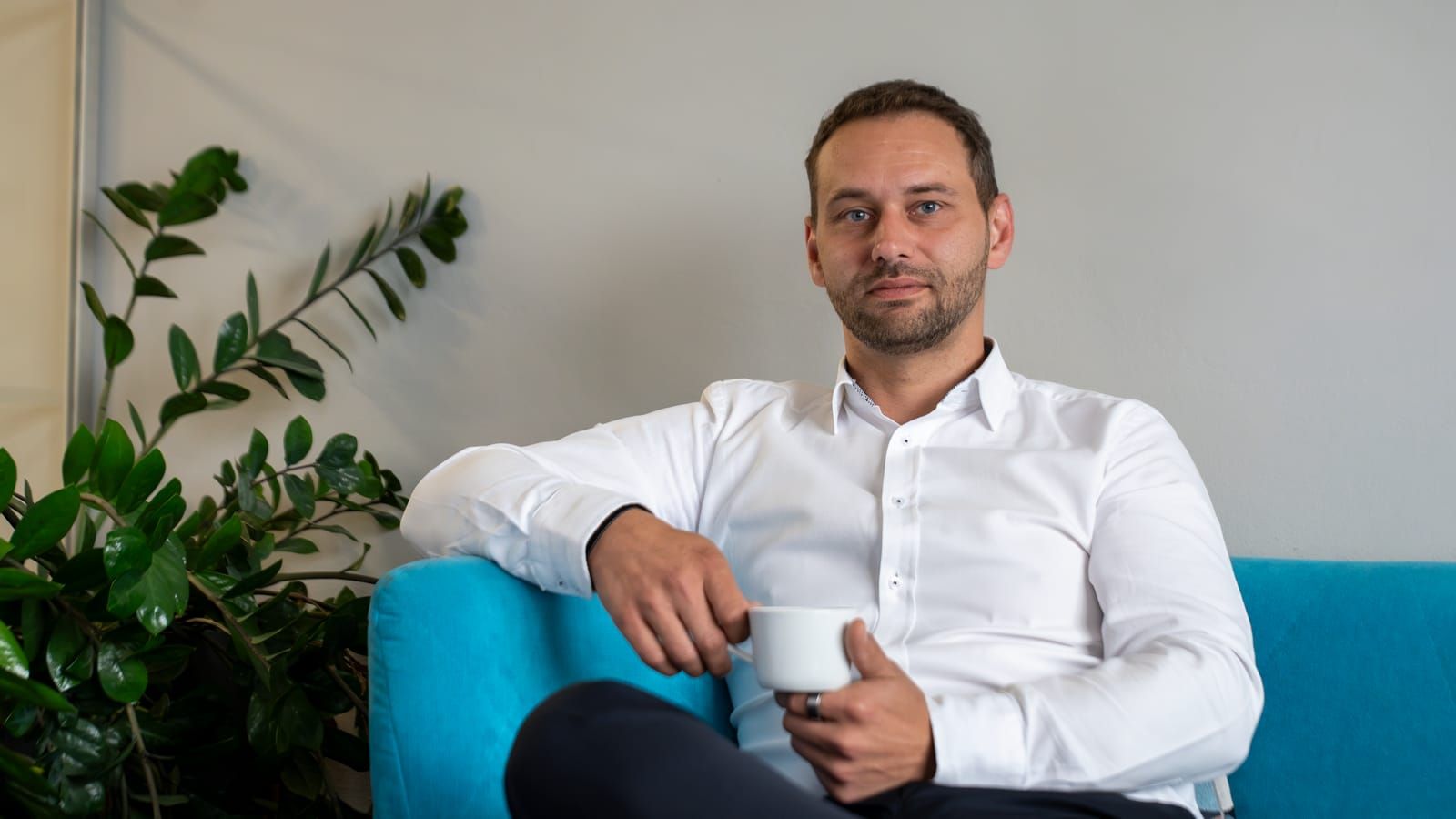
Warehouse systems are increasingly connected with automation, robotics and analytics, and customers expect them to pay back faster. We asked the company’s new CEO, Ladislav Havlík, how he sees the market developing and where E LINKX wants to go next.
WMS as the hub of the warehouse ecosystem
Ladislav Havlík sees customers increasingly taking a broader view: it is not just about the system itself, but about managing the warehouse as a whole. “The market is moving away from the question ‘which WMS should I buy?’ towards ‘how do I get the whole warehouse under control, and how do I keep automating it?’,” he says.
WMS is therefore ceasing to be a standalone application. It is becoming the central layer of a wider ecosystem that connects automated warehouses, robotics, conveyor systems, IoT, ERP and analytics.
At the same time, expectations of the implementation itself are changing. “Customers don’t want implementations that run for years or huge projects. They want a faster return, the option to grow step by step, and a system that can adapt to the way they operate.”
Artificial intelligence depends on good data
Artificial intelligence is the most talked-about topic in the industry today. Ladislav Havlík takes a pragmatic view of it. “AI in the warehouse makes sense where it helps people decide: in planning work, forecasting volumes, or optimising stock and where goods are put away. But only when it has something to work from. If a warehouse doesn’t have accurate, up-to-date data, AI will just repeat the same mistakes faster.”
In his view, the road to AI therefore starts with the basics: reliable records, clear processes and a WMS that collects data in real time. “First the warehouse has to be under control. Only then does it make sense to build smarter decision-making on top of it.”
Automation as an answer to labour shortages
The shortage of warehouse staff is a long-standing problem and one of the main reasons companies invest in automation. “Automation isn’t meant to replace people, but to relieve them of repetitive and physically demanding work. People can then concentrate on exceptions, quality and the things a machine can’t handle,” says Havlík.
He also points out that automation does not have to be a single big project. “Not every warehouse needs fully automated operation straight away. It often makes more sense to start with a smaller step, such as mobile robots or better control of picking, and to expand as the investment pays off.”
Integration decides success
With every new technology in the warehouse, the number of systems that have to talk to each other grows: ERP, the online shop, conveyors, robots and carriers. “Today it’s no longer just about what the WMS itself can do, but how well it connects to everything around it. Integration is exactly where projects most often get stuck,” says Havlík.
He sees this as one of E LINKX’s advantages: a combination of experience in warehouse logistics, business systems and infrastructure. “We understand not only the warehouse, but also the environment it works in. That saves customers both time and risk.”
A long-term technology partnership
E LINKX builds on deep know-how in business systems, warehouse logistics, infrastructure and software development. Working with customers does not end with delivering a licence. “For a large share of our customers we are a long-term technology partner, and we know their environment and their business well,” Havlík explains.
He regards the company’s people and the experience gathered over its years on the market as its main strengths. “We have teams that have handled genuinely complex projects, and customer relationships that weren’t built overnight.”
From projects to repeatable solutions
He sees room for further growth in productisation. The company wants to turn the know-how from completed projects into clearly defined products and services that can be rolled out efficiently and repeatedly. This approach responds directly to the market’s demand for a faster return and gradual expansion.
“We can’t build everything from scratch every time.”
Focus and speed of response
According to Havlík, the key to competitiveness is the ability to focus. “A technology company can do an enormous number of interesting things, but it can’t be the best at everything. We need to know where we have a real competitive advantage and put our energy there.”
At the same time, products and services have to make economic sense for both the company and its customers. He also attaches growing importance to speed, meaning the ability to respond flexibly to developments in technology, in the market and in customers’ needs.
Decisions based on facts
He wants to apply the same principle to running the company: fewer levels of approval, open communication and decisions backed by data. “I want problems not to be swept under the carpet, and for it to be normal to say that something isn’t working. Decisions should be based on facts as far as possible, not on feelings or on the phrase ‘we’ve always done it this way’.”
Continuity and an open dialogue with customers
What matters for existing customers and partners is that the change in leadership does not mean a fundamental U-turn. “A change of CEO doesn’t mean the company changes from the ground up overnight. I want to build on what works at E LINKX and what our customers value,” says Havlík.
He also wants to actively find out what customers and partners are missing today and where E LINKX can offer more. “For me, long-term partnership isn’t just a phrase. It has to rest on the cooperation genuinely bringing something to both sides.”
In his view, E LINKX enters its next phase in a strong position: “The company has the knowledge, the people and a customer base that are a very good foundation to build on. And now is the right moment to make full use of that potential.”
Looking at how to manage or automate your warehouse? Contact our team and we will discuss where a WMS can bring your operation the greatest benefit.
Related products
- Digitalisation and tracking
Element WMS
We manage the movement of goods in the warehouse from receiving to dispatch. The system guides the warehouse worker to the location from a mobile terminal, so you know where every item is.
- Digitalisation and tracking
Krabicovka
Off-the-shelf WMS for companies with neither the time nor the budget for an implementation project. You can have a basic warehouse with goods receipt, picking and stocktaking up and running within hours.
- Digitalisation and tracking
eSCAN
Cut the cost of digitising shipments. In a single pass through the gate, eSCAN captures photo documentation and measures the shipment's dimensions and weight.